AI Applied Outreach
At Intapp, I led the design of Applied Outreach, an AI experience in DealCloud that helps professionals write personalized client emails using the relationship intelligence and firm data already in the system. The AI drafts. The person decides what gets sent.
Applied Outreach was part of Intapp's push to bring AI into core DealCloud workflows. Business development teams were spending real effort personalizing outreach by hand, because personal emails get better engagement.
Personal takes research: when did we last talk, who at the firm knows them, what's new at their company. Most of that already lived in DealCloud, spread across records.
AI alone doesn't fix this. Any model can write a polite, fluent email, and that's the risk: a generic draft is easy to produce and easy to ignore.
How might we help someone write outreach that reflects what the firm actually knows about each relationship, without taking the writing away from them?
- Options at the end didn't help. Our first concept added a choice without adding context.
- The best material was already in the system. Relationship data is what makes an email personal, and no general-purpose model has it.
- You can only judge a draft if you can see what it's based on.
The first concept offered AI-generated talking points to pick from at the end of the email flow. It was quick to build, but it added friction and did little to reduce effort or build confidence.
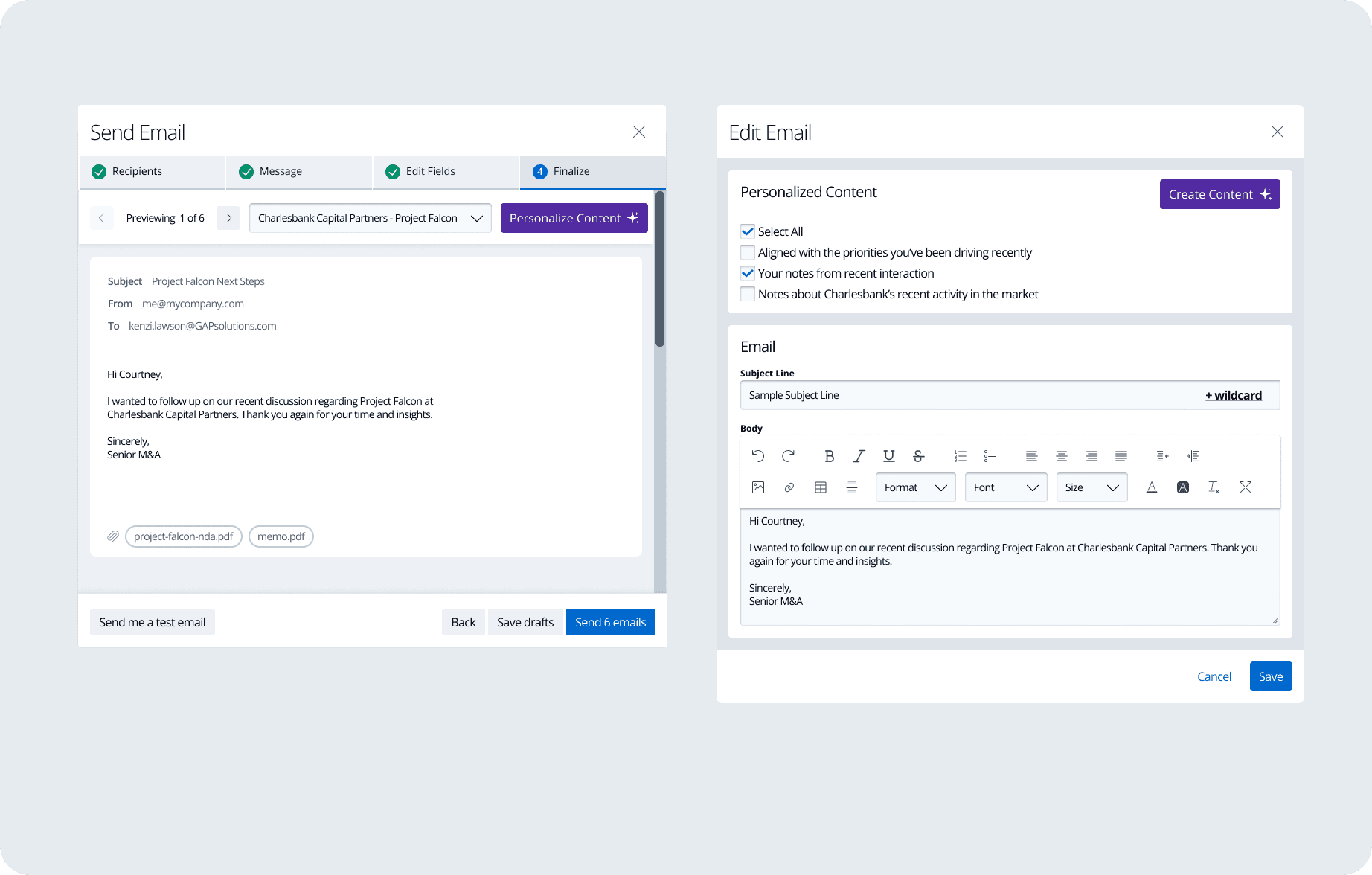
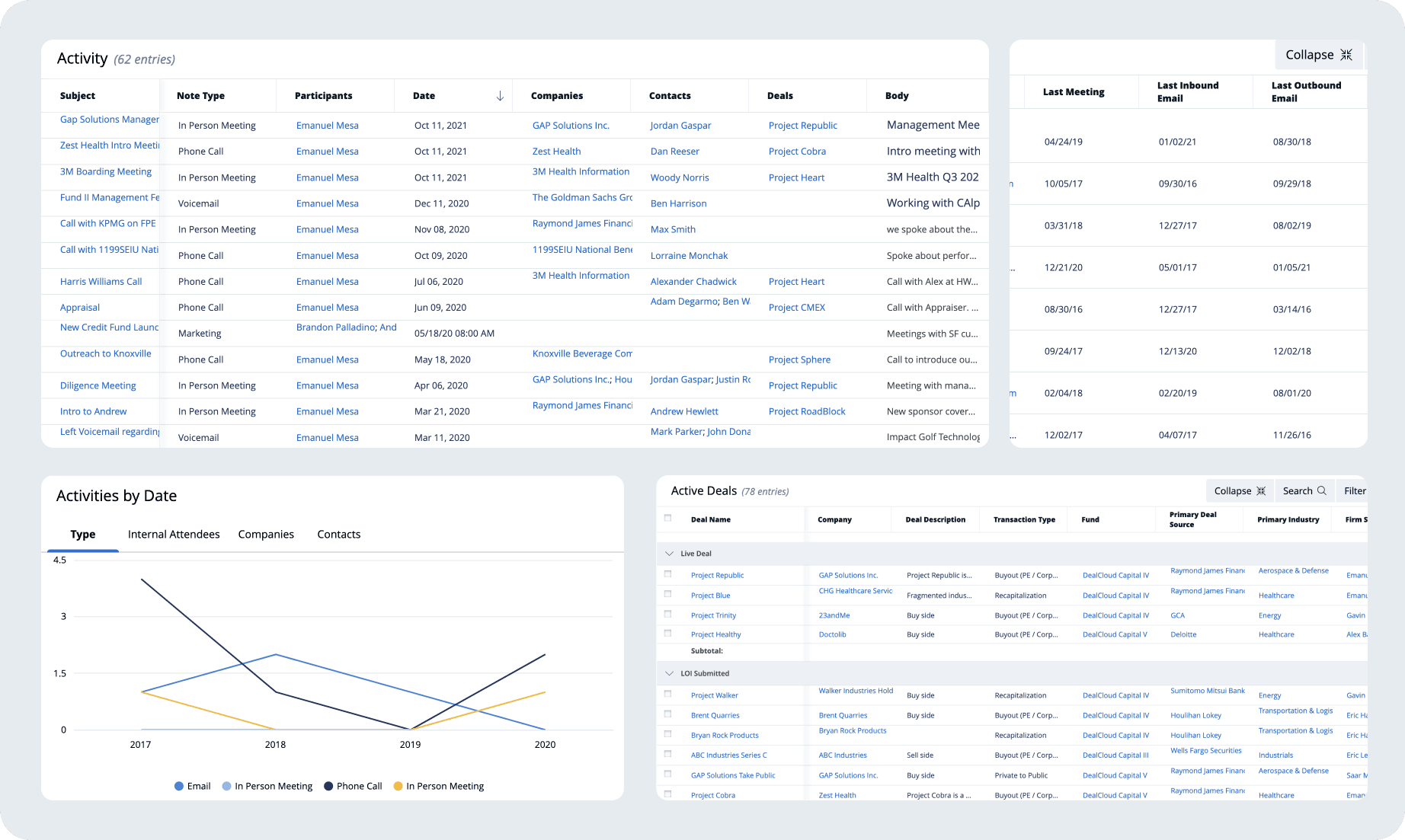
It also showed we were underusing the relationship and firm intelligence DealCloud already had. I stepped back, partnered with multiple teams to get buy-in, and reframed the experience around that context. The AI's job changed from offering generic phrases to bringing the right context to the moment of writing.
Here's how the two concepts compared:
Built on relationship and firm data only DealCloud has, so drafts can actually be personal. The AI brings the right context to the moment of writing.
It took longer, and it needed buy-in from multiple teams.
Quick to build.
It added friction and did little to reduce effort or build confidence. It also left the firm's relationship data unused.
A draft worth editing. With the data in place, generating text was the easy part. Making the draft a real starting point, and making it clear whether to trust it, was not. So the draft is grounded in firm data it can point to, that context sits right beside it, and each email can be previewed one at a time before anything goes out.
With a single click, the system picks up relevant signals and generates a tailored draft. Next to the email, an Insights panel shows what it's built on: recent interactions, relationships, and news, relationship scores for each recipient, and colleagues who already know them.
The intelligence was already in the system. The design work was putting it in front of the person writing.
Before sending, people can preview each email, send themselves a test, or save drafts. Nothing goes out until they send it.
From a standalone talking-points feature to an experience built on DealCloud's own relationship intelligence.
Generating text is the cheap part now. Helping someone say the right thing to the right person depends on context a model doesn't have on its own, and on the sender still recognizing the email as theirs.